




|
|

发送给朋友
|

分享到朋友圈
|

[RFID Cable Tie Tags: A Practical Product for Logistics, Sealing and Asset Tracking]
Release date:[5/27/2026] read[550]Times
RFID Cable Tie Tags: A Practical Product for Logistics, Sealing and Asset Tracking
Introduction
Many businesses need a tag that can do more than identify an item. They also need the tag to attach securely, work in movement-heavy environments, and support simple visual inspection. This is where **RFID cable tie tags** become useful.
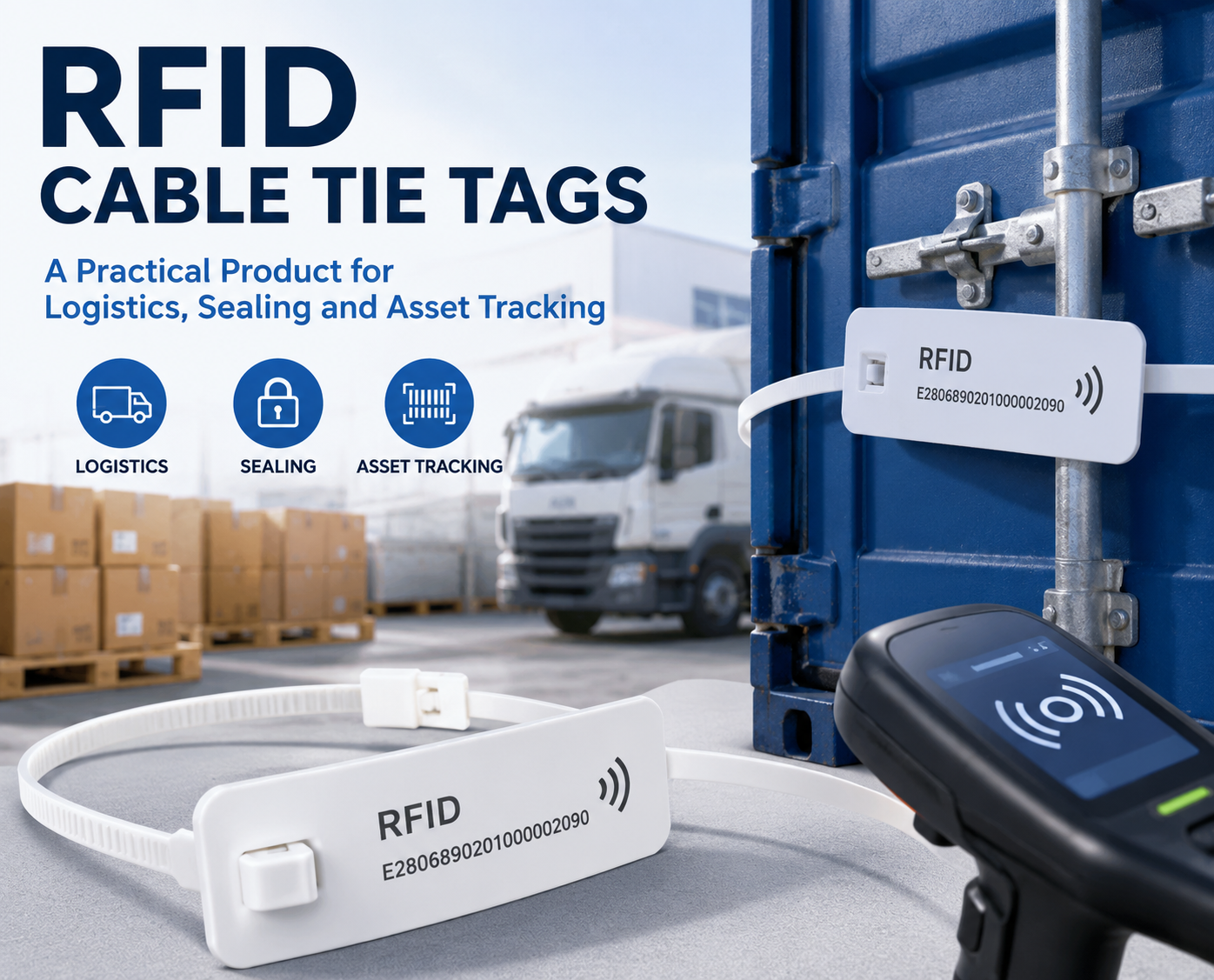
RFID cable tie tags combine an RFID chip and antenna with a cable tie structure. They can be fastened to bags, containers, cables, pipes, tools, returnable assets, pallets, and logistics items. Once attached, the tag can be scanned wirelessly to identify the item, verify movement, or support anti-tamper management.
For logistics, warehousing, industrial sites, and asset management projects, RFID cable tie tags offer a practical balance of identification, fastening, and traceability.
What Are RFID Cable Tie Tags?
RFID cable tie tags, also called RFID zip tie tags or RFID seal tags, are RFID products designed with an integrated tie or locking structure. They can be wrapped around an item and secured without needing a separate adhesive label or mounting accessory.
They are commonly used when:
· The item does not have a flat surface.
· Adhesive labels may fall off.
· The tag must be attached to cables, bags, pipes, or handles.
· The business needs both identification and sealing.
· The asset moves frequently or is exposed to outdoor conditions.
Depending on the application, RFID cable tie tags can be made for HF, NFC, or UHF RFID systems.
Key Benefits of RFID Cable Tie Tags
1. Easy Attachment
RFID cable tie tags are simple to install. Staff can loop the tie around the item and lock it in place. This reduces installation time and avoids drilling, screws, or adhesives.
2. Secure Identification
Each RFID tag has a unique ID. When connected to management software, the tag can identify the asset, owner, status, location, inspection record, or logistics batch.
3. Suitable for Irregular Items
Some items are difficult to label because they are round, narrow, curved, or rough. RFID cable tie tags are ideal for cables, pipes, bags, baskets, cages, tools, and returnable containers.
4. Supports Anti-Tamper Management
Some RFID cable tie tags can be designed as single-use seal tags. If the tie is cut or removed, the physical condition shows tampering. This is useful for logistics, customs, warehouse control, and asset custody.
5. Works With Bulk Scanning
UHF RFID cable tie tags can support longer-range reading and batch identification, helping businesses scan multiple tagged items quickly.
Common Applications
Logistics and Transportation
RFID cable tie tags can be attached to logistics bags, cages, containers, pallets, and returnable transport items. They help businesses verify loading, unloading, dispatch, receiving, and return processes.
Warehouse Asset Tracking
Warehouses use RFID cable tie tags for tools, bins, racks, carts, cables, and reusable assets. The tags help reduce search time and improve inventory accuracy.
Cable and Pipe Management
In data centers, factories, energy sites, and construction projects, RFID cable tie tags can identify cable bundles, pipe sections, maintenance points, and inspection assets.
Anti-Tamper Sealing
RFID seal tags can be used for bags, boxes, cabinets, meters, containers, and restricted-access assets. They help combine digital identification with physical seal control.
Waste and Recycling Management
RFID cable tie tags can be attached to bins, bags, and containers to support collection records, route management, and service verification.
Choosing the Right RFID Cable Tie Tag
When selecting RFID cable tie tags, buyers should consider:
· RFID frequency: HF, NFC, or UHF.
· Read distance requirement.
· Indoor or outdoor environment.
· Material strength and flexibility.
· Locking method and tamper evidence.
· Waterproof and UV resistance.
· Size of the tied object.
· Printing, numbering, and encoding requirements.
· Single-use or reusable design.
If the application involves metal, liquid, outdoor exposure, or long-range reading, sample testing is recommended.
Why RFID Cable Tie Tags Are Good for B2B Projects
RFID cable tie tags are especially useful for companies that need product customization. Different industries may require different tie lengths, tag shapes, colors, chips, memory sizes, and printing methods.
We can provide:
· Custom RFID cable tie tags and RFID seal tags.
· HF, NFC, or UHF options.
· Logo printing, numbering, QR code, barcode, and encoding.
· Single-use or reusable designs.
· Bulk production for logistics, warehouse, industrial, and asset tracking projects.
FAQ
Are RFID cable tie tags reusable?
Some designs are reusable, while tamper-evident seal tags are usually single-use. The right option depends on your management process.
Can RFID cable tie tags be used outdoors?
Yes, outdoor materials can be selected for waterproof, UV-resistant, and durable performance.
What is the difference between an RFID cable tie tag and an RFID label?
An RFID label is usually adhesive and needs a suitable surface. An RFID cable tie tag attaches by looping and locking, making it better for irregular objects.
Can RFID cable tie tags be customized?
Yes. Custom options may include chip type, frequency, tie length, color, printing, serial number, QR code, and data encoding.
Call to Action
Looking for RFID cable tie tags for logistics, sealing, or asset tracking? Contact us for custom samples, technical recommendations, and bulk order support.

