NFC Wristband System Design for Events, Resorts and Venues
Designing an NFC wristband system involves more than choosing a chip and printing a logo on a wearable band. A workable deployment must connect the wristband, reader hardware, access rules, guest records, ticketing platform, and, where required, a cashless payment environment. If those components are designed separately, the venue may face slow entry, unclear permissions, failed transactions, difficult wristband replacement, and inconsistent visitor records.
This guide explains how to plan an NFC wristband system for festivals, resorts, water parks, hotels, sports venues, gyms, and membership-based leisure facilities. It focuses on the decisions that should be made before samples are approved: workflow mapping, chip and protocol selection, reader placement, data handling, functional testing, and operational fallback procedures.
The most reliable approach is to use the wristband as a durable identifier connected to a managed backend system. The backend controls ticket status, access rights, wallet activity, and audit records, while the wristband enables rapid identification at the point of use.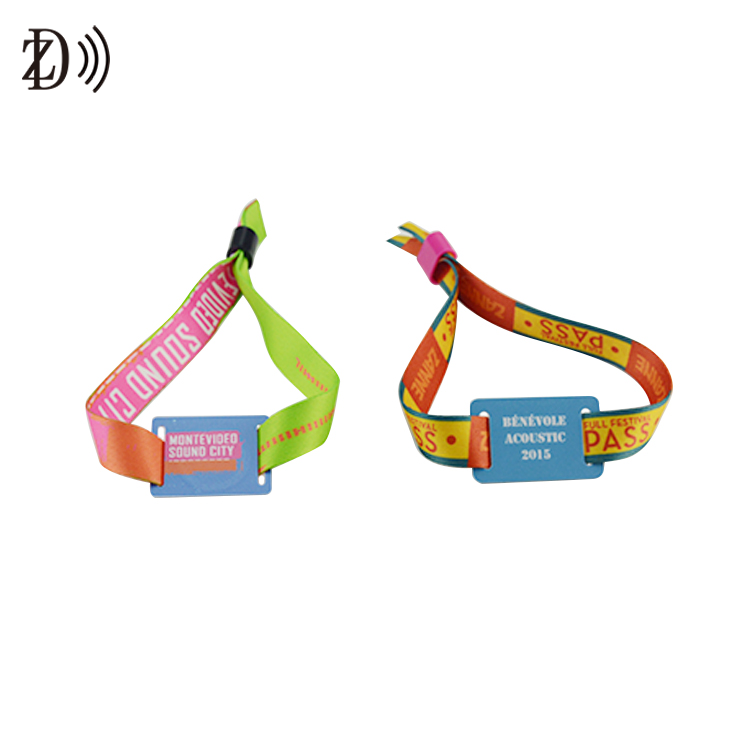
Why NFC Wristband Projects Fail Before Hardware Is Chosen
Many NFC wristband projects start with the wrong question: “Which wristband looks best?” Appearance matters for events and guest-facing environments, but it should follow the operational design. A more useful starting point is to define the guest journey and determine what the wristband must do at every touchpoint.
A one-day event may only need ticket validation and VIP-zone access. A resort may require room access, water-park entry, locker access, meal-plan validation, membership recognition, and payment-linked services. These environments have different security, reader, network, data, and material requirements.
Separate Guest Identity, Access Rights and Payment Balance
A wristband identifier should not be treated as the guest’s complete identity, access record, or payment account. In a well-designed system, the wristband carries a token or credential, while the backend maps that credential to the relevant guest profile and current permissions.
Guest identity: The profile created during registration, booking, ticket purchase, or membership enrollment.
Access rights: Permissions assigned to the profile, such as general admission, staff access, VIP entry, room entry, or locker usage.
Payment information: A tokenized wallet, prepaid balance, linked payment method, or transaction account managed by the venue’s approved system.
Wristband identifier: The unique ID or encoded credential that enables the system to retrieve the applicable record.
This separation makes lost-wristband handling more manageable. An operator can disable the old identifier and issue a replacement without exposing personal information or payment data on the physical tag.
Choose an Online, Offline or Hybrid Validation Model
The network model affects visitor experience, reader configuration, and implementation cost. A temporary event with limited connectivity may require a different approach from a hotel, gym, or resort that uses permanent networked readers.
| Validation model | How it works | Suitable applications | Planning focus |
| Online validation | The reader checks the central backend in real time before approving access or a transaction. | Hotels, permanent venues, controlled retail areas, and POS environments. | Network stability, response speed, redundancy, and backend capacity. |
| Offline validation | The reader uses locally stored permissions, keys, or approved lists. | Remote gates, temporary festivals, and areas with weak connectivity. | Synchronization, credential expiry, revocation, and post-event reconciliation. |
| Hybrid validation | Readers work online normally but retain limited offline rules if connectivity is interrupted. | Multi-zone events, resorts, water parks, and large visitor attractions. | Clear fallback limits and reliable resynchronization procedures. |
For cashless functions, the fallback logic should be agreed before launch. A venue may permit limited offline transactions, pause payment while maintaining entry validation, or require staff approval when the terminal cannot reach the backend. The correct model depends on the payment platform, project risk level, and operating policy.
Map the Guest Journey Before Selecting Tags and Readers
An NFC wristband system should be designed around operational moments rather than a generic product list. Mapping the guest journey identifies where the wristband is issued, where it is tapped, what decision follows the tap, who handles exceptions, and what happens if a wristband is damaged or lost.
Registration and Wristband Issuance
The first operational point is registration. Depending on the project, this may happen through online ticketing, a hotel property management system, a membership platform, a kiosk, a staffed counter, or batch pre-registration. The issuance step must bind the physical wristband to the correct guest, ticket holder, or member record.
Read or encode the wristband identifier.
Associate the identifier with the relevant guest, ticket, booking, or membership record.
Apply the correct access package, date range, validity period, or membership tier.
Confirm the wristband works at a compatible test reader before issuing it.
Record wristband status so it can be suspended and replaced if needed.
For pre-encoded wristbands, the project team may prepare serial-number lists for import into the event or membership platform. For on-site encoding, the venue needs compatible encoders, defined staff procedures, and a reconciliation process for unused, failed, or replacement wristbands.
Entry Gates, Rooms, Lockers and Restricted Zones
Access-control rules should match the real use of each space. A general-admission wristband may be valid at an entry gate but rejected at staff areas, VIP lounges, hotel rooms, or paid attractions. A gym membership wristband may be accepted at a reception gate but denied at a locker after the membership period ends.
Before deployment, list every controlled point and define the validation logic for each one:
Does the reader validate only that the wristband is active, or does it check a specific entitlement?
Can the wristband enter repeatedly, or is it restricted to a single admission?
Should staff see a specific error reason, such as expired, wrong zone, inactive, or already used?
How quickly must the reader respond during peak arrival periods?
What happens if the reader is temporarily disconnected from the network?
These decisions affect whether basic identifier logic is adequate or whether the deployment requires a more capable credential, stronger authentication, or offline synchronization rules.
Food, Beverage and Merchandise Payment Points
When a wristband is used as a payment credential, the physical tag should not contain bank-card information. A safer architecture uses a token or unique identifier that retrieves an account from the venue’s approved wallet or payment platform. The wristband tap initiates the transaction; the platform manages balances, authorization, transaction history, refunds, and settlement.
Operational teams should decide whether the project uses prepaid balances, postpaid room charges, linked payment methods, vouchers, or a combination of these methods. They should also establish rules for refunds, disputed transactions, spending limits, account suspension, and lost-wristband recovery.
Lost Wristband Replacement and Account Recovery
A lost wristband is a routine operational event, especially at large festivals, water parks, resorts, and gyms. A guest may lose a band in a pool, remove it accidentally, damage a closure, or report it missing after an access or payment transaction. The replacement workflow should be fast enough to avoid creating long service queues.
Verify the guest through the registration, ticketing, booking, or membership record.
Disable the old wristband identifier promptly.
Issue a new wristband and transfer valid access rights according to venue policy.
Review wallet or transaction status where payment-linked functions are used.
Log the replacement for inventory control and fraud monitoring.
Build the Data Architecture Around Tokenized Identifiers
Data architecture is one of the most important parts of an NFC wristband system. A wristband may contain memory, but storing extensive personal information on the tag is usually unnecessary. Instead, the tag should carry only the data required for identification, approved authentication, or the intended NFC interaction.
What to Store on the NFC Wristband
The right approach depends on the chip, reader system, and security model. In a basic deployment, the backend may identify a wristband by its chip UID or a programmed serial number. In more controlled deployments, protected memory areas, application identifiers, authentication keys, or secure dynamic messages may be used.
A unique identifier linked to a backend record.
A programmed serial number used for issuance and inventory reconciliation.
An NDEF URL record for smartphone interaction, registration, help pages, or campaign content.
Protected credential data for approved access-control applications.
A limited offline validity indicator where supported by the platform design.
Any data written to the wristband should be reviewed for sensitivity, update requirements, and the consequences of loss or unauthorized scanning.
What Should Remain in the Backend Platform
Personal information, payment records, room assignment details, membership status, detailed access policies, and transaction history should normally remain in the backend system. This allows operators to update permissions without replacing a wristband and revoke access quickly when required.
Guest profile and contact details.
Ticket package, booking details, and membership validity.
Access rights by zone, date, time, and credential category.
Wallet balance, transaction records, refunds, and settlement information.
Lost-wristband status, replacement history, and fraud-control rules.
Why UID-Only Designs Require Additional Controls
A chip UID can identify a physical tag, but it should not automatically be treated as a secure authentication credential. UID-only designs may be suitable for lower-risk uses such as simple attendance tracking when the reader ecosystem and platform are designed for that purpose. Where a wristband controls hotel rooms, paid services, high-value admission, or restricted zones, the project should assess stronger authentication methods and backend validation.
Security controls may include protected memory, diversified keys, secure chip options, encrypted communication, backend transaction validation, blacklists, anti-passback rules, and usage monitoring. The appropriate design depends on the project risk level and should be aligned with the system integrator and platform provider.
Choose the NFC Technology Layer for the Actual Use Case
NFC wristband projects commonly use 13.56 MHz high-frequency technology, but the selected standard and chip family should match the reader infrastructure, desired security level, memory requirement, smartphone interaction requirements, and project budget.
ISO/IEC 14443A Versus ISO/IEC 15693 for Leisure Systems
ISO/IEC 14443 describes proximity smart-card technology operating at 13.56 MHz and is commonly used for short-range identification, access control, ticketing, and many NFC applications. ISO/IEC 14443 includes Type A and Type B communication interfaces. ISO/IEC 15693 also operates at 13.56 MHz but is associated with vicinity-card applications and can support longer read distances depending on tag and reader design. [230][231]
The practical question is not which standard is universally better. The relevant question is which protocol is supported by the installed readers, access-control software, ticketing platform, and intended user workflow. Chip-reader compatibility should be confirmed before a bulk order is released.
MIFARE Classic, MIFARE DESFire and NTAG Chip Selection
| Chip family | Typical use | Planning advantage | Key consideration |
| MIFARE Classic | Legacy access control, membership programs, and basic closed-loop projects. | Common compatibility with established reader ecosystems. | Security requirements should be reviewed before using it for higher-risk applications. |
| MIFARE DESFire | Higher-security access, transit-style projects, and multi-application credentials. | Supports more advanced security structures and application design. | Requires compatible readers, suitable key management, and correct backend integration. |
| NTAG213, NTAG215 or NTAG216 | Smartphone interaction, tap-to-URL, guest engagement, and light data storage. | Common NFC options for mobile interaction and NDEF records. | Memory needs should be confirmed; a basic NFC tag should not be treated as a high-security access credential. |
| Secure NFC chip options | Authenticated NFC interaction, brand-protection workflows, and higher-value credentials. | Can support more controlled authentication and verification processes. | Requires a backend capable of validating the selected security method. |
For example, MIFARE Classic EV1 is an ISO/IEC 14443 Type A contactless IC. The correct selection should still be based on the reader environment and security requirement rather than on frequency alone. [232][233]
When Smartphone Compatibility Matters
Some wristband projects need both reader-based access control and smartphone interaction. A festival may use fixed readers for entry while allowing attendees to tap their wristbands with a phone to access schedules, venue maps, registration pages, or sponsor content. In that situation, the chip choice, NDEF encoding, and mobile user journey need to be planned together.
Smartphone behavior can vary by device model, operating system, browser, NFC settings, and the type of encoded content. If phone interaction is part of the project, the intended workflow should be tested on representative iOS and Android devices before full production.
Reader Placement and Operational Read Performance
A wristband can perform poorly if the reader is installed in the wrong position. Wearable NFC tags operate close to the human body, which can influence antenna behavior. Reader location, mounting surface, surrounding metal, tap direction, reader power, and user behavior all affect real operating performance.
Gate and Turnstile Reader Positioning
At a busy entry point, the reader should be placed where guests can naturally present the wristband without stopping, twisting their wrist uncomfortably, or tapping repeatedly. Poor reader placement creates hesitation, slows queues, and may be incorrectly blamed on the wristband.
Place the reader at a comfortable height and angle for a natural wrist tap.
Use clear visual indicators so guests know where to present the band.
Separate entry and exit logic when attendance tracking or anti-passback is required.
Test with left- and right-handed users, varied wrist sizes, and common wearing positions.
Check for nearby metal structures, power equipment, or interference from adjacent readers.
POS Counter Orientation and Tap Behavior
Point-of-sale use differs from gate access. At a food, beverage, or merchandise counter, guests may present the wristband while holding a phone, drink, bag, or tray. The reader should be positioned so staff can confirm a successful read without requiring the guest to search for the right tap location.
The NFC read is only one part of the transaction. Account lookup, balance validation, transaction approval, receipt handling, and exception procedures should also be evaluated to avoid moving queues from the entrance to the sales counter.
Wet Environments, Body Detuning and Reader Tuning
Water parks, pools, spas, and outdoor venues require additional testing. A wet wristband, sunscreen residue, saltwater exposure, repeated flexing, and the body’s proximity to the tag can influence the overall operating experience. Material and wristband construction should therefore be selected together with the reader configuration.
Testing should simulate the intended environment rather than relying only on desktop reads. A silicone wristband planned for a water park should be tested while worn, after wetting, at different tap angles, and after repeated use cycles. A fabric or Tyvek wristband for an event should be tested after printing, fastening, bending, and normal handling.
Design the Deployment and Test Plan
System testing should begin before the first visitor arrives. A structured acceptance plan reduces the chance that a simple configuration issue becomes an opening-day failure. The plan should test wristbands, reader hardware, backend data, staff procedures, and exception handling together.
Encoding and Commissioning Workflow
Commissioning is the process of preparing wristbands and associating them with the operating system. It may be completed before shipment, at a fulfillment center, during on-site registration, or through a combination of these methods.
Confirm the approved chip type, memory configuration, and identifier format.
Prepare the serial-number list or encoding file with version control.
Encode or register wristbands using the required platform format.
Verify a defined sample quantity using compatible readers.
Record failed tags, replacement tags, and unused inventory.
Protect or lock memory areas when required by the system design.
After the access workflow, chip requirements, wristband structure, and acceptance criteria have been confirmed, the project specification can be reviewed through NFC bracelet manufacturing options for sample preparation and production planning.
Acceptance Testing Before Public Launch
Acceptance testing should include more than confirming that a wristband can be read once. The objective is to verify that the entire operational chain works under conditions similar to public use.
| Test area | What to verify | Why it matters |
| Visual inspection | Correct color, artwork, variable data, closure, and physical finish. | Prevents mixed batches, print errors, and incorrect access-category identification. |
| Chip read test | UID, memory access, NDEF record, or programmed credential behavior. | Confirms the correct chip and encoding are present. |
| Reader-location test | Read performance at each gate, lock, POS point, locker area, or restricted zone. | Identifies installation, environmental, and interference issues before launch. |
| Wear-condition test | Reading while worn, bent, tightened, wet, or used at different angles. | Represents real visitor behavior more accurately than a tabletop test. |
| Backend workflow test | Valid access, denied access, expiry, replacement, refund, and lost-wristband handling. | Confirms that operational procedures match configured rules. |
Fallback Procedures During Network Interruption
Every public-facing wristband system needs a defined response to network interruption. A festival may continue entry with locally synchronized ticket data. A resort may permit room or area access while pausing some payment functions. A gym may temporarily use a manual membership-check process until connectivity is restored.
Define which readers can validate credentials offline.
Identify which functions must pause when real-time backend access is unavailable.
Set clear authority for manual access overrides during an outage.
Plan how offline records will synchronize after connectivity returns.
Prepare staff guidance so guests receive consistent explanations.
Case Study: RFID Tyvek Wristband System for Event Access and VIP Control
An event management company in the United States required a reliable RFID wristband solution for an offline event program. The wristbands were planned for three related functions: general event access, membership identification, and VIP recognition. The organizer needed a disposable format that could be distributed efficiently to a large attendee group while providing visible color differentiation and stable 13.56 MHz RFID reading.
Buyer Requirement
The customer selected 250 × 19 mm Tyvek wristbands for a 10,000-piece deployment. The project used Fudan F08 chips operating at 13.56 MHz, with 1 KB memory. Black, green, and red wristbands were specified to support the event’s access-category management and visual identification process. The wristbands also needed to be waterproof for normal event handling and outdoor exposure.
Application: Event access, membership identification, and VIP recognition.
Chip: Fudan F08.
Frequency: 13.56 MHz.
Memory: 1 KB.
Material: Tyvek.
Size: 250 × 19 mm.
Colors: Black, green, and red.
Waterproof requirement: Yes.
Customization: Logo, custom colors, full-color printing, individual ID, and packaging.
Quantity: 10,000 pcs.
Production lead time: 10 working days.
Solution
ZDCARD developed the Tyvek wristband structure according to the specified size, color plan, and event identification requirements. The Fudan F08 RFID chips were integrated into the wristband construction, and the customer’s full-color branding, logo, individual ID processing, and packaging requirements were applied during production.
Before shipment, ZDCARD performed RFID/NFC functional testing on the production batch to verify stable reading behavior in the intended 13.56 MHz environment. Visual quality checks covered artwork accuracy, color consistency, individual ID processing, wristband construction, and packaging condition.
Result
The 10,000 RFID Tyvek wristbands were completed and delivered within the agreed 10-working-day production period. The finished batch met the approved design requirements, passed the customer’s inspection, and demonstrated stable RFID reading during verification.
The wristbands were successfully used for event access, membership recognition, and VIP identification. The project shows why chip compatibility, individual ID handling, visual access categories, and functional testing should be confirmed before bulk wristband production.
Frequently Asked Questions About NFC Wristband Systems
Can one NFC wristband manage entry, lockers and payment?
Yes. A single wristband can act as the identifier for multiple services when the backend platform maps that identifier to different permissions and accounts. Access, locker, and payment functions should be managed as separate rules or services rather than storing all information directly on the wristband.
What happens if the network goes offline at an event?
The outcome depends on the system design. Online-only systems may pause validation until connectivity returns. Offline or hybrid systems can continue limited functions using synchronized local data. The project team should define in advance which functions remain available and how records are reconciled after reconnection.
Should a project use UID-only identification?
UID-only identification may be suitable for lower-risk functions, such as simple attendance tracking, when the reader ecosystem and platform are designed for that purpose. For hotel rooms, payment-linked services, high-value admission, or restricted zones, the project should assess stronger authentication methods, backend validation, and additional anti-fraud controls.
How should readers be tested before opening day?
Readers should be tested with approved wristband samples at every installed location. The test should include normal tap behavior, different wrist orientations, actual wearing conditions, expected environmental exposure, valid and invalid access rules, and backend response. A successful desktop read does not prove that a gate or POS workflow will perform correctly during peak traffic.
Which chip should be used for a festival NFC wristband?
The correct chip depends on the reader and ticketing system, required security level, memory requirement, and whether smartphone interaction is included. A project using Fudan F08 or MIFARE Classic-compatible infrastructure should verify reader and software compatibility before production. Higher-security or multi-application projects may need a different chip family and key-management model.
Can NFC wristbands work in water parks and pools?
Yes, provided the material, structure, chip integration, and reader environment are selected for wet conditions. Silicone wristbands are commonly evaluated for repeated water exposure, while other structures may be suitable for shorter use periods. The project should test worn wristbands after wetting and at actual reader points before approving production.
Why ZDCARD Supports NFC Wristband Projects
ZDCARD Tech Co., Ltd. (ZDCARD Group) is based in Shenzhen, China and produces RFID cards, RFID tags, NFC products, inlays, RFID wristbands, and readers for identification, access-control, membership, logistics, hospitality, and customer-engagement applications. When a project moves from system design into product specification and batch preparation, ZDCARD supports it as an NFC bracelets manufacturer with material selection, chip integration, custom printing, encoding, functional testing, inspection, and packaging preparation.
ZDCARD operates from its own high-tech industrial park of approximately 30,000 square meters. Production management follows ISO 9001 quality management and ISO 14001 environmental management systems. Manufacturing capabilities include Heidelberg four-color offset printing, cutting and laminating, RFID chip bonding, RFID converting, variable-data coding, laser processing, and packaging equipment.
For event, resort, gym, membership, and access-control programs, ZDCARD can evaluate wristband material, chip compatibility, reader environment, visual customization, UID or NDEF encoding, and batch testing requirements before production. This helps align the physical wristband with the system specification rather than treating the wearable tag as a separate purchasing item.
Project Information for Wristband System Planning
For an NFC wristband project, target quantity is only one part of the technical brief. Clear project information helps align the wristband, reader infrastructure, and backend workflow before sampling or production.
Application scenario, such as festival entry, hotel access, gym membership, locker control, resort access, or payment-linked services.
Existing reader, door-lock, POS, ticketing, membership, or property-management system details.
Preferred chip family, frequency, protocol, memory requirement, and required security level.
Wristband material, target size, closure type, expected wear period, and exposure to water or cleaning chemicals.
Artwork, color references, logo placement, serial-number, barcode, QR-code, UID, or NDEF encoding requirements.
Target quantity, packaging preference, project schedule, sample requirement, and acceptance-test expectations.
Samples can be prepared before bulk-order confirmation when the structure, chip, artwork, and functional requirements are defined. The sample stage should include both appearance approval and functional testing with the intended reader environment.

















 NFC Wristband System Design for Events and Resorts Guide